
Anyango Nyar Siaya: The Japanese Nyatiti Player Who Broke Luo Gender Barriers
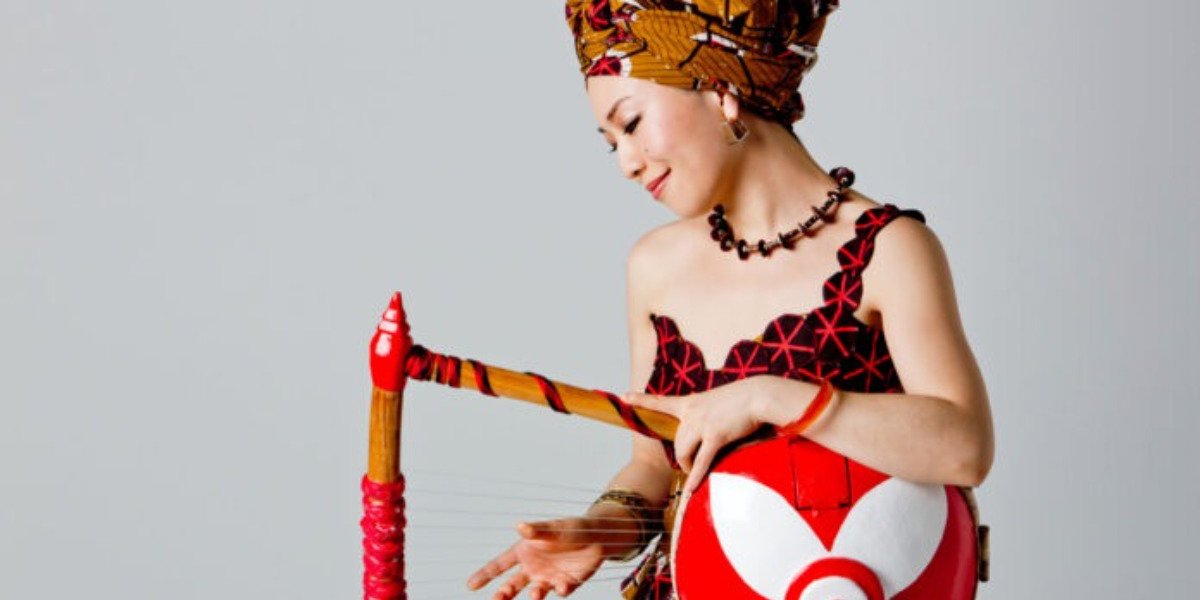
A newly released book detailing the journey of Japanese musician Eriko Mukoyama, known as Anyango Nyar Siaya, was launched on Wednesday at the Alliance Francaise in Nairobi.
This highlights her experience as the first woman permitted to learn and perform the nyatiti, a traditional Luo lyre historically reserved for men. The nyatiti is a traditional eight-stringed instrument of the Luo community in western Kenya.
Despite its name, loosely translated as “daughter of the clan”, the instrument has long been restricted to male performers. These limitations are rooted in cultural beliefs that associate certain forms of musical expression with masculinity, particularly those requiring physical movement and public performance.
Scholars such as Dean Bland have argued that gender-based restrictions in music are not unique to the nyatiti. In various traditions, instruments like the electric guitar have been linked to dominant male identities, with performance styles reinforcing gender stereotypes.
Such associations have contributed to the marginalisation of female musicians in multiple genres, discouraging their participation in certain musical roles. Anyango’s interest in the nyatiti led her to Siaya County, where she requested training from Okumu K’Orengo, a respected nyatiti master.
Although initially reluctant, K’Orengo eventually agreed, marking a significant shift in the instrument’s tradition. Their teacher-student partnership challenged long-standing gender norms and introduced a cross-cultural element to the nyatiti’s evolution.
Anyango’s success as a performer has since brought the nyatiti to international audiences, elevating it beyond its local cultural context. Fluent in Japanese, Swahili, Dholuo, and English, she has used her music to connect different cultures, making the nyatiti accessible to a global audience.
The exclusion of women from nyatiti playing reflects a broader historical trend of gendered division of labour. Traditionally, the instrument was played in itinerant settings, often considered incompatible with women’s domestic roles. However, musicians like Anyango and Kenyan artist Susanne Owiyo have demonstrated that such boundaries can be redefined.
K’Orengo’s decision to mentor a female, foreign musician raises important questions about the balance between cultural preservation and adaptation. While some may view this as a break from tradition, others see it as a necessary step towards inclusivity. Their collaboration has redefined what it means to uphold tradition in a changing world.






Comments
No comments yet — be the first.