
Finland Supports President Ruto’s Call for UN Security Council Reforms
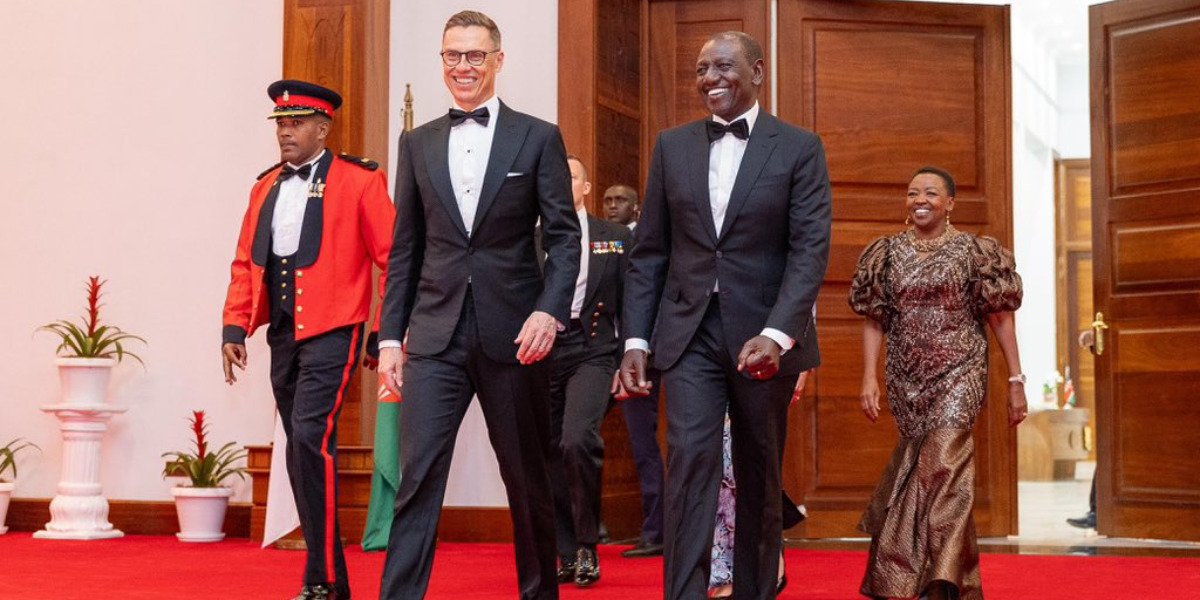
Finnish President Alexander Stubb recently called for a restructuring of global governance to reflect the growing influence of the Global South, emphasising the pivotal roles of Kenya, Nigeria, and South Africa within Africa's evolving position in the international order.
Addressing an audience at the University of Nairobi, Stubb underscored the need for multilateral institutions to adapt to the shifting balance of power. Speaking in conjunction with the launch of his book, "The Triangle of Power: Rebalancing the New World Order", Stubb asserted that regions historically marginalised in global governance—Africa, Asia, and Latin America—are now asserting their presence on the world stage.
He cites demographic and economic trends as primary drivers of this transformation, noting that Africa’s population is projected to reach four billion and Asia’s five billion by the end of the century, positioning these regions as central to global economic dynamics. Stubb criticises the United Nations Security Council for its outdated structure, which he argues predominantly reflects the post-World War II power dynamic.
He has voiced his support for Kenyan President William Ruto's initiative to increase African representation in the Security Council, emphasising that a broader range of nations must be included in global decision-making processes. The Finnish leader highlights the geopolitical advantage held by the 120 countries comprising the Global South. Unlike the United States-led West or the China-Russia-dominated East, these nations possess greater flexibility in choosing their alliances.
Stubb suggests that the Global South has the leverage to push for either multipolar transactional agreements or a renewed commitment to multilateralism, but stressed that the success of the latter hinges on global institutions evolving to accommodate the rising influence of these regions. Stubb cautions that one of the primary challenges facing the Global South is navigating relationships with both the East and West without instigating geopolitical rivalries.
He advocates for a multi-vectoral foreign policy approach, where nations engage with multiple partners to advance their interests. He cites infrastructure projects as an example, suggesting that countries could simultaneously collaborate with the United States, China, and Russia to drive development. Despite his optimism about the Global South's growing influence, Stubb warns that failing to adapt to these changes could lead to instability.
He urges global leaders to consider the trajectory of global governance and ensure that emerging powers are integrated into decision-making structures.




Comments
No comments yet — be the first.