
A Look Inside Kenya's National Archives
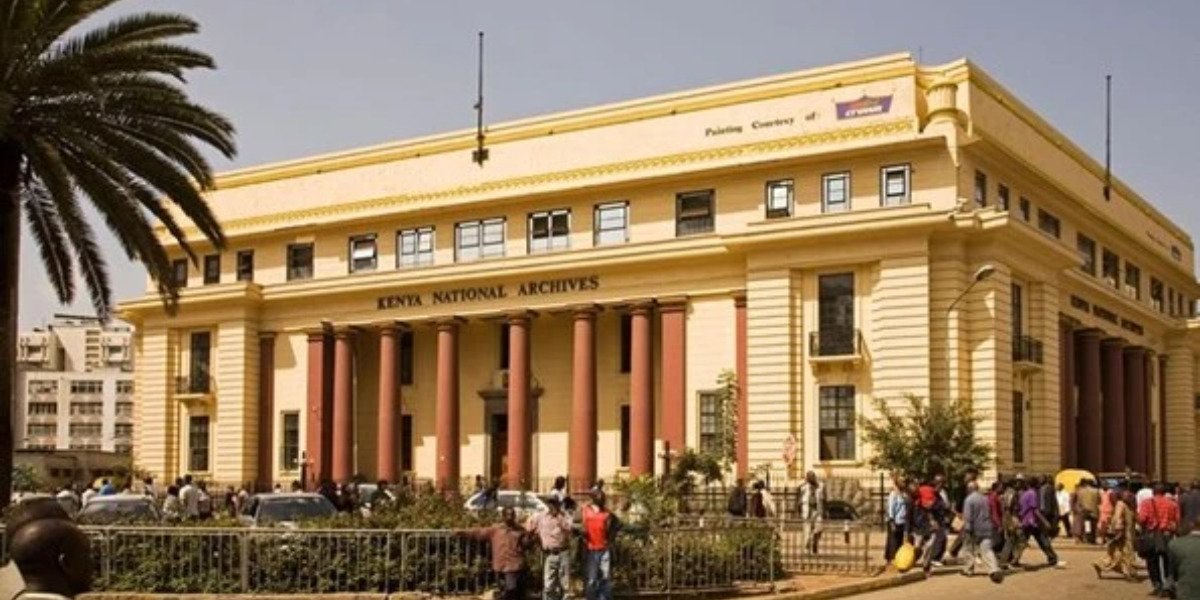
Situated prominently along Moi Avenue in the heart of Kenya's capital, the Kenya National Archives stands as a critical repository of the nation's historical and cultural heritage, offering invaluable insights into Kenya's past.
Established in 1965 following Kenya's independence, the institution functions as the Kenya National Archives and Documentation Service (KNADS) and is tasked with overseeing the nation's public records. Originally built in 1930 as a banking facility for National and Grindlays Bank, the structure was repurposed to its current role, operating under the jurisdiction of the Ministry of Gender, Culture, the Arts and Heritage. KNADS has expanded its reach beyond Nairobi, establishing branches in Mombasa, Kisumu, Nakuru, Kakamega, and Nyeri.
The Archives preserves a wealth of historical materials, encompassing political movements, cultural traditions, and artistic expressions. The ground floor houses the Murumbi Gallery, named in honour of Kenya's second Vice President, Joseph Murumbi. Known as the largest Pan-African art gallery on the continent, it showcases a collection of artefacts, antique furniture, musical instruments, and armaments, exemplifying Murumbi's dedication to preserving African heritage.
The upper floors display visual representations of Kenya's political evolution, including rare photographs documenting former President Daniel Moi's early life and images of the Mau Mau struggle for independence. This section vividly portrays Kenya's transition from colonial rule to self-governance. An extensive collection of library resources, microfilms, and audiovisual records is also available, serving as vital tools for researchers and scholars studying the nation's complex history.
Among the notable exhibits are weapons used during the fight for independence including arrows, spears, and daggers that stand as poignant reminders of the freedom fighters' resilience. Access to the Archives is available to the public for a nominal fee. Kenyan citizens can enter for Ksh50, while the fee for foreigners is Ksh200. An additional membership fee of Ksh200 is required for those seeking access to library services.





Comments
No comments yet — be the first.