
MPs Slam Kabogo Over Unlawful Suspension of TV Stations Covering Demonstrations
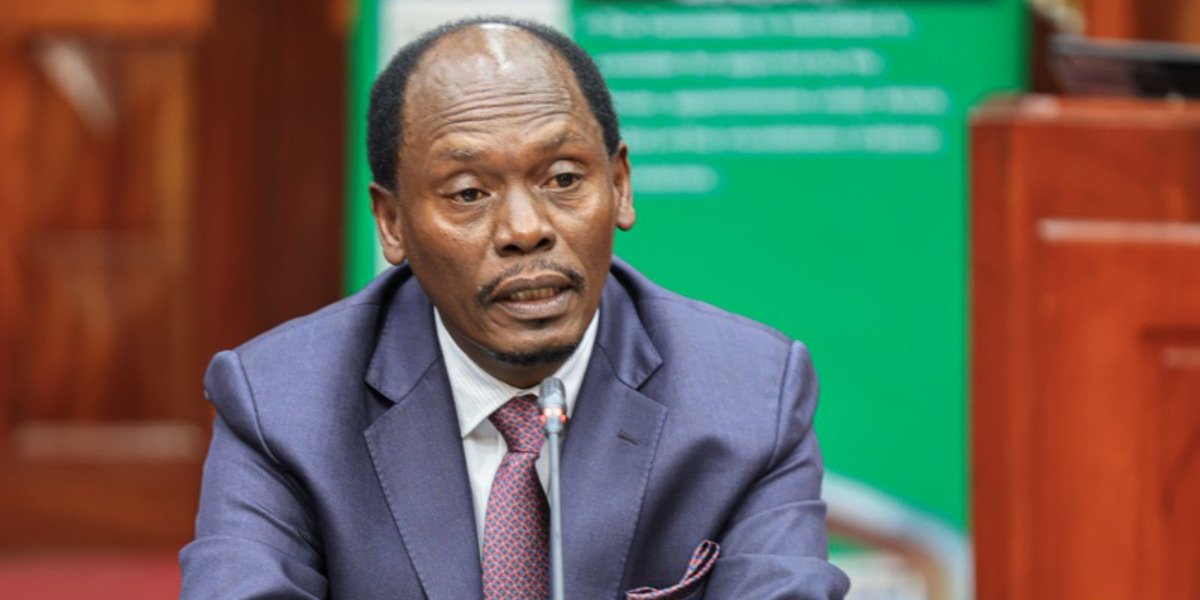
Kenya's Information, Communications and Technology (ICT) Cabinet Secretary (CS), William Kabogo, faced rigorous questioning this week regarding his controversial decision to suspend broadcasting signals for three national television stations: NTV, KTN, and K24.
The suspension, enacted during demonstrations on 25 June 2025, has ignited concerns over media freedom and potential executive overreach within Kenya's constitutional framework. Kabogo's appearance before the National Assembly's Delegated Legislation Committee on Thursday focused on the legal justification for his directive. Members of Parliament (MPs) repeatedly pressed the CS to provide the statutory authority that permitted such action.
He struggled to cite any specific law, fuelling accusations of acting outside his mandated powers. The rationale behind the suspension, according to Kabogo, was the broadcast of violent images during what he termed "watershed hours." However, parliamentarians dismissed this as legally insufficient and constitutionally questionable.
Kathiani MP Robert Mbui challenged the ICT Minister's inconsistent application of media blackout measures. He referenced a live broadcast of an incident where two armed police officers shot a street hawker at point-blank range, questioning why that was not also deemed inappropriate. Committee chairperson Samuel Chepkong'a, a seasoned lawyer, cautioned Kabogo that executive directives lacked grounding in existing law.
"Only parliament, under Article 94 of the constitution, can create enforceable legal norms," Chepkong'a said.
Kabogo conceded that his actions may have been unsupported by statutory mandate. Kabogo's defence cited clause 11 of a proposed media code of conduct, which suggests a mandatory seven-second delay on live broadcasts to prevent the dissemination of prohibited content. MPs swiftly pointed out that the proposal remains unratified and lacks legal force. Mathare MP Anthony Oluoch dismissed the CS's argument as legally void, while Kilgoris MP Julius Sunkuli warned against misusing regulatory drafts as censorship tools.
The controversy highlights longstanding tensions between press freedom and state interests in maintaining public order in Kenya. Article 34 of the Kenyan Constitution explicitly protects media from state interference. While provisions such as Article 33(2) and the Kenya Information and Communications Act (KICA) allow regulation of harmful content, experts argue that these must be interpreted narrowly to prevent abuse.
On the day of the demonstrations, the Communications Authority of Kenya (CA), through Director-General David Mugonyi, cautioned television and radio stations against continued live coverage of the protests. Mugonyi referenced constitutional and statutory provisions, including KICA's section 46(1), warning that noncompliance could trigger regulatory sanctions. His pronouncement, like Kabogo's decision, has prompted questions about its constitutional basis and proportionality.




Comments
No comments yet — be the first.