
Chief Justice Koome Urges New IEBC to Restore Youth Confidence in Democracy
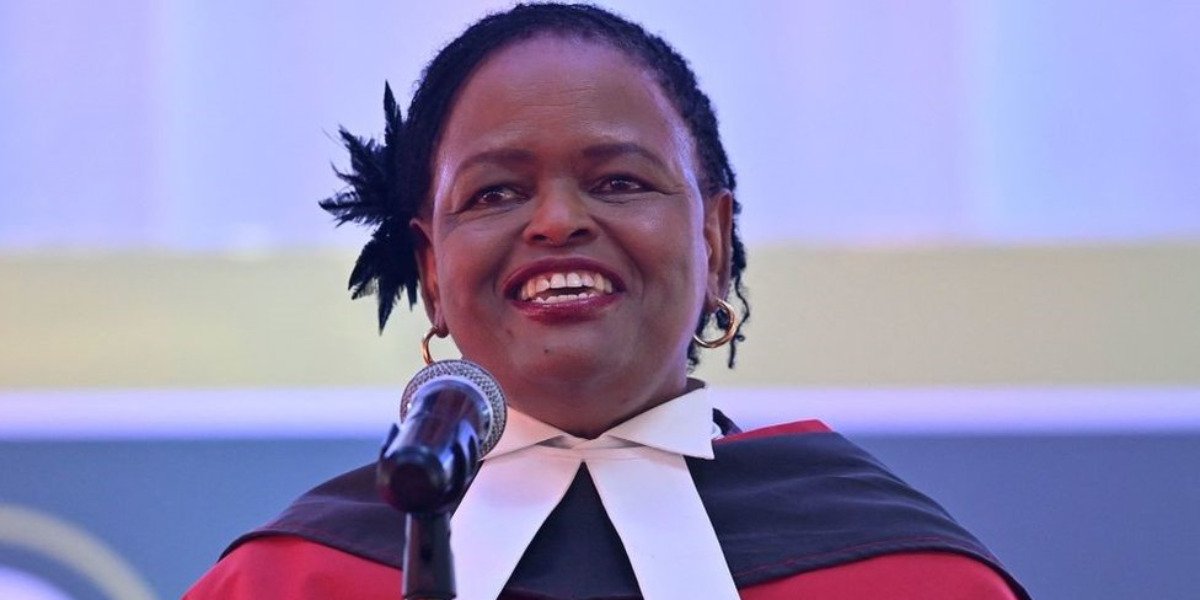
Kenya’s Independent Electoral and Boundaries Commission (IEBC) has formally installed its new leadership.
This signals the end of a period of institutional uncertainty and the commencement of crucial preparations for the 2027 General Election. The swearing-in ceremony, conducted at the Supreme Court in Nairobi, saw all seven newly appointed commissioners, including Chairperson Erastus Edung Ethekon, commit to upholding the integrity of Kenya's electoral processes.
Chief Justice Martha Koome, who presided over the ceremony, emphasised the gravity of the commission's responsibilities and the public’s expectation for accountability, particularly given the prevailing disillusionment among the youth regarding democratic institutions. She said that the inauguration was a symbolic transfer of public trust, highlighting the burden of expectation that now rests on the new IEBC team.
The appointments conclude a period of inactivity within the IEBC, triggered by the staggered and politically fraught departure of previous commissioners. The recent recruitment process faced legal challenges, with a High Court bench deeming the gazettment of the nominations by President William Ruto unconstitutional, citing disregard for conservatory orders. Nevertheless, the appointments have been finalised, ending an administrative deadlock that delayed critical processes such as by-elections and boundary reviews.
Ethekon has swiftly set the tone for his leadership, pledging allegiance to the electorate and grounding his commitment in constitutional principles, primarily Article One, which vests sovereign power in the people. Drawing inspiration from civil rights icon John Lewis, Ethekon characterised voting as "the most powerful nonviolent tool we have," indicating his intent to bolster civic engagement and restore public confidence in an electoral system recently marred by scepticism and legal challenges.
Operationally, the IEBC must address long-delayed ward and constituency elections, as well as the delimitation of electoral boundaries, all of which have direct implications for political representation and equity. Chief Justice Koome has urged the commissioners to address these issues with "speed and seriousness," viewing the delays as threats to Kenya's democratic health. Article 88 of the Constitution mandates the IEBC to oversee free and fair elections, requiring both administrative efficiency and a robust engagement strategy to regain public trust.
Alongside Ethekon, the commission comprises Ann Njeri Nderitu, Moses Alutalala Mukhwana, Mary Karen Sorobit, Hassan Noor Hassan, Francis Odhiambo Aduol, and Fahima Araphat Abdallah. Each commissioner brings diverse competencies, critical for steering the IEBC through the upcoming high-stakes electoral cycle. The political atmosphere remains tense. Senator Karungo wa Thang’wa’s post-appointment remarks, "A bad IEBC is better than none!" highlight the existing unease between institutional necessity and the desire for democratic perfection.
Public expectations, especially among the youth, are rising. These younger citizens increasingly demand transparency, inclusion, and justice in political representation, with their influence likely shaping both the discourse around the IEBC's operations and the broader trajectory of governance. For the commission, engaging this demographic and addressing their aspirations will be vital in building trust and enhancing electoral participation.
The stakes are high, with the IEBC operating in an environment where performance is assessed not only by procedural compliance but by perceived fairness and inclusivity. Historical precedents, including allegations of vote rigging and contested results, cast a shadow over the institution, making reputation management as critical as logistical execution.

Comments
No comments yet — be the first.