
IEBC Says Kenyans Cannot Recall MPs Due to Legal Void from 2017 Court Ruling
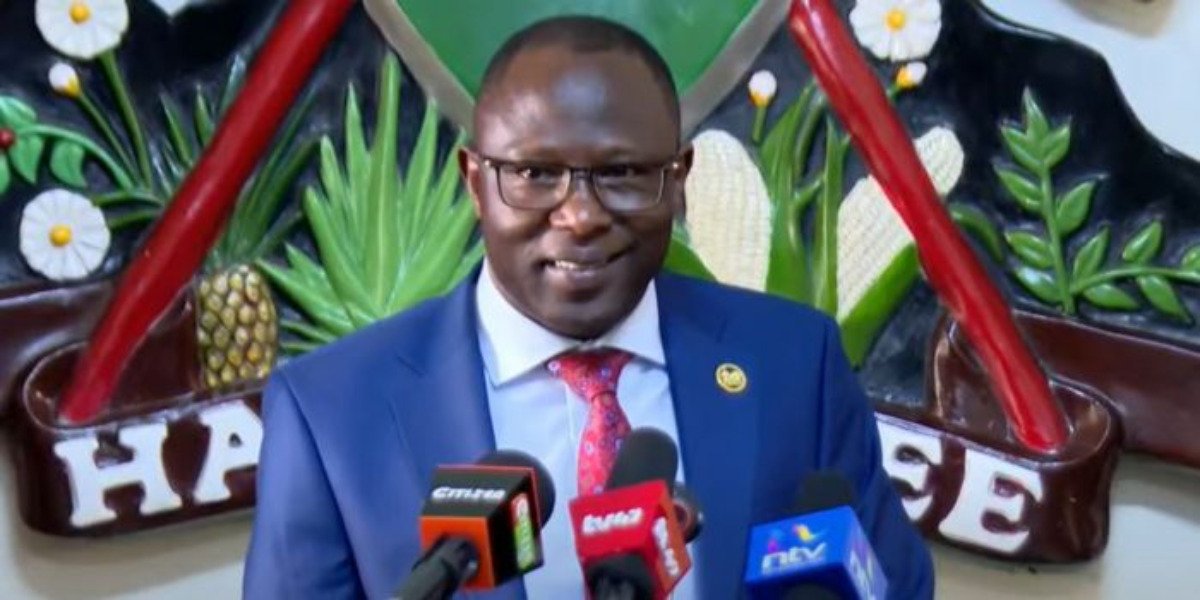
The Independent Electoral and Boundaries Commission (IEBC) has confirmed that Kenyan citizens are currently unable to exercise their constitutional right to recall Members of Parliament (MPs) and Senators.
This inability stems from the absence of enabling legislation, a void created by a 2017 High Court ruling that struck down key provisions of the Elections Act. IEBC Chairperson Erastus Ethekon said on Wednesday that the commission cannot process recall petitions due to this legal vacuum.
The 2017 ruling in Katiba Institute and Transform Empowerment for Action Initiative (TEAM) v Attorney General & Another [2017] KEHC 4648 (KLR), deemed sections of the Elections Act 2011 relating to MP recall unconstitutional, citing discriminatory barriers to voters and a failure to uphold Article 104 of the Constitution, which guarantees citizens the right to recall elected officials.
While Parliament amended the law to allow for the recall of Members of County Assemblies (MCAs) following the court's decision, corresponding legislation for MPs and Senators has not been enacted, leaving Article 104 effectively in suspension. The IEBC's announcement arrives amidst growing public discontent, evidenced by four petitions already filed with the commission seeking the removal of sitting MPs.
Noteworthy among these is a petition targeting Nairobi Woman Representative Esther Passaris, filed by activists alleging constitutional violations and abuse of office. Another petition is directed at North Imenti MP Rahim Dawood, with constituents accusing him of neglecting his duties and supporting controversial legislation.
IEBC Secretary Marjan Hussein clarified that the commission is unable to act on these petitions. Sections 45 to 48 of the Elections Act, which previously outlined the legal grounds and procedures for initiating a recall, were invalidated by the High Court, eradicating the legal basis for adjudication. The Law Society of Kenya (LSK) has criticised Parliament for its inaction in addressing this legal gap.
LSK President Faith Odhiambo has warned that the constitutional safeguard provided by Article 104, and by extension, the sovereignty of the people under Article 1, is presently unenforceable. Odhiambo said, "Unfortunately, the necessary legal reconciliation was never done," and urged Parliament to uphold the "true spirit and intent of Article 104 and Chapter Six of the Constitution on leadership and integrity."
Attention is now focused on the Elections (Amendment) Bill, Senate Bill No. 29 of 2024, which is awaiting its second reading in the National Assembly. The Bill aims to reconcile the Elections Act with the 2017 court ruling by removing the invalidated provisions, including the requirement to file recall petitions in the High Court and the discriminatory exclusions regarding voter eligibility.
However, the LSK has expressed reservations about the Bill, arguing that the proposed amendments may unduly restrict the grounds under which an MP or Senator can be recalled, potentially undermining the democratic intent of the recall provision. Odhiambo asserted that "the disturbance of the threshold for removal is unnecessary and was not contemplated by the Court."
The IEBC's inability to act on recall petitions has significant repercussions for democratic accountability in Kenya. The lack of a statutory framework for national legislators, while a system is in place for MCAs, effectively insulates MPs and Senators from public scrutiny between elections. The current situation places the onus squarely on Parliament to enact constitutionally sound legislation. The IEBC has formally recommended that lawmakers legislate a clear and inclusive process for recalling MPs and Senators.
Until this occurs, the constitutional right to recall remains theoretical rather than practical.


Comments
No comments yet — be the first.