
Outering Road Under Siege: How Rival Gangs Turned a Matatu Stage into a War Zone
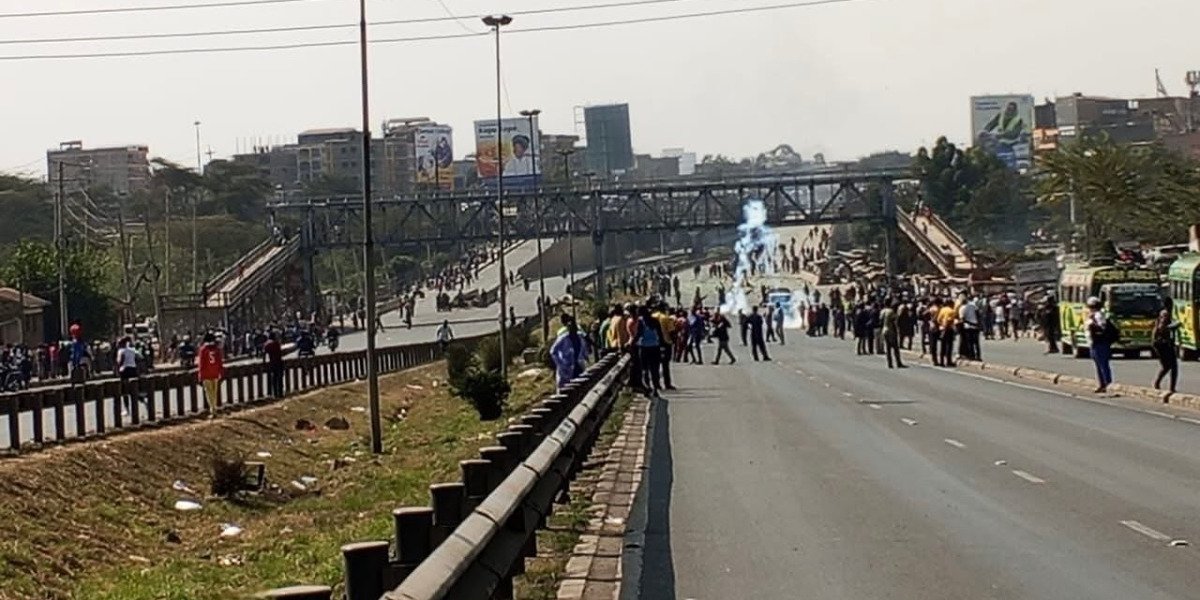
A wave of violence has swept through the Harmony 25 and 26 matatu stages along Outering Road, transforming the transport hub into a scene of conflict.
The unrest, marked by coordinated attacks from armed youths, has left dozens injured and public service vehicles severely damaged. The crisis, which began last week, has prompted matatu operators and local residents to express fears of political motivation. The attacks, characterised by the use of machetes, crude weapons, and glass bottles, have disrupted daily transport operations and spread fear among commuters and crew members.
Witnesses describe chaotic scenes with bloodied victims and shattered windshields marking the aftermath. Debris and broken glass still littered the roadside on Wednesday, serving as stark reminders of the recent turmoil. Jonathan, a matatu operator, recounts narrowly escaping a severe assault.
"One individual attempted to strike me with a bottle, which I managed to intercept mid-air. However, amidst the struggle, I was struck on the head by a machete," he explained, indicating a stitched wound across his scalp.
George Ang’wena, another operator, reports being beaten with sticks after confronting the attackers. "They tore off our route boards, and when I questioned their actions, one of them wielded a large knife and swung it at me," he said.
The violence appears to stem from longstanding tensions between rival matatu groups, compounded by infrastructural changes and local political instability. The construction of the Outering Road roundabout several years ago divided operators into Routes 25 and 26, creating friction over control of the lucrative terminus.
Joseph Majo, a driver with Manimo Sacco, alleges that external actors are fuelling the current aggression.
"These individuals do not own vehicles. They arrive armed with knives and bottles, intending to seize what we have established. They are being paid to do so," he claimed.
Operators assert that the attackers are hired assailants from Buruburu and Kariobangi South, deployed to take control of the stage. They contend that the violence extends beyond transport routes, reflecting broader political manoeuvrings. Billy Ojura, chairperson of the stage, believes the absence of political leadership since the death of area MCA Joel Muneve in April has left them exposed.
“This is political; nobody is defending us,” he said.
Despite repeated reports to local police stations, operators claim that law enforcement has failed to intervene effectively. Some allege that police have actively sided with the attackers, using tear gas against the victims rather than the perpetrators.
“We provide the police with information, and how do they respond? By deploying tear gas against us,” Majo expressed.
Buruburu Sub-County Police Commander Francis Kamau confirms that investigations are ongoing, but said that no concrete evidence has yet linked the violence to any specific politician. Kamau also acknowledges the socio-economic dimensions of the conflict, noting that the roundabout’s construction displaced many youths who previously operated matatus.
“Those left unemployed may be bitter with their circumstances and instigate the problem, feeling they, too, deserve a share of the proceeds,” he stated.


Comments
No comments yet — be the first.