
How a Kenyan Akorino Pastor Is Changing Conversations About Christianity in America
African theologians and church leaders are challenging long-standing views that Christianity arrived in Africa solely through European missionaries, arguing that the continent has a deep and independent Christian heritage.
The reassessment is being driven by both academic research and the growing influence of African Christian communities around the world. Scholars argue that Africa has played a significant role in shaping Christian history and theology, rather than simply receiving religious traditions from elsewhere.
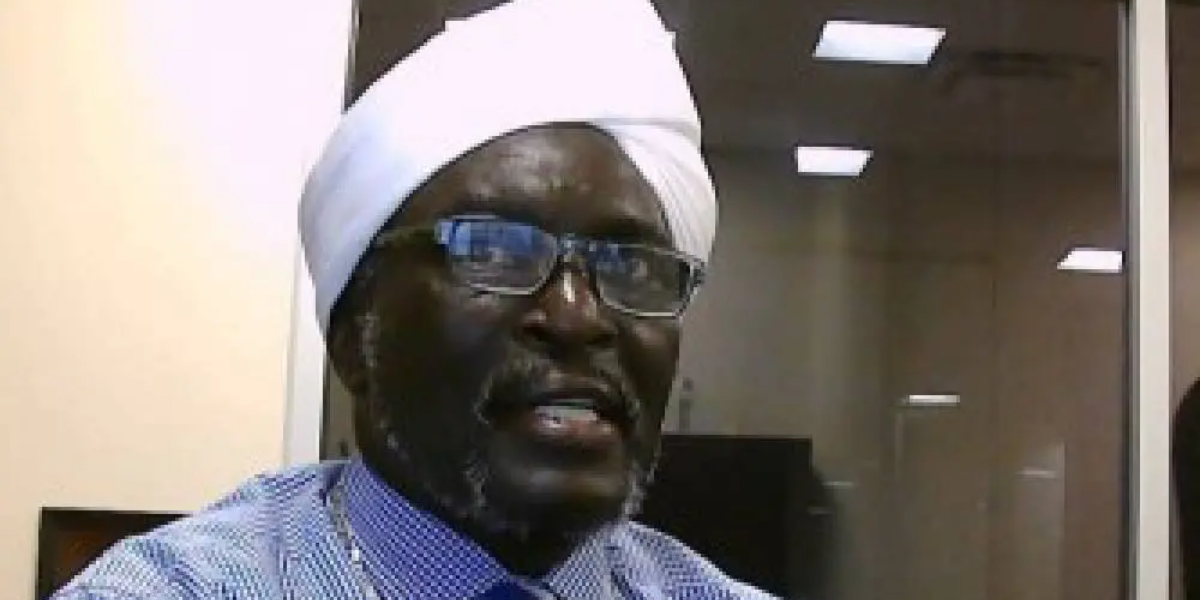
Among the leading voices is Dr Solomon Waigwa, a Kenyan theologian from the Akorino faith who is based in the United States. Through his research, teaching and ministry, Waigwa argues that Africa should be recognised as an important contributor to Christianity's development.
His work highlights the Akorino church as an example of an indigenous Christian movement that emerged in Kenya during the colonial period. The Akorino movement began in the late 1920s among the Agikuyu people in central Kenya.
It developed in response to colonial rule and missionary influence, with believers emphasising the guidance of the Holy Spirit, prayer, prophecy and healing. These practices led to the formation of the Holy Ghost Church of East Africa, which faced persecution under British colonial authorities but continued to grow and establish itself as one of Kenya's distinctive Christian traditions.
Today, Akorino believers live both in Kenya and across the diaspora, including in the United States. In his book The Akorino Church in Kenya: An Indigenous Original Pentecostal Church, Waigwa argues that the movement should be understood as an authentic African expression of Pentecostal Christianity rather than a blend of Christianity and traditional religion.
He maintains that the church is grounded in biblical teachings while reflecting the realities of colonial-era Kenya. His research challenges interpretations that have portrayed indigenous African churches as cultural compromises rather than centres of theological development.
A central theme of Waigwa's work is that Christianity is not exclusively associated with Europe. He points to early Christian communities in North Africa and Ethiopia as evidence of Africa's long-standing place within the faith. He argues that African churches can interpret Scripture independently and make meaningful contributions to global Christian thought.
Waigwa's ministry in the United States reflects this perspective. He serves as Senior Pastor of Rhema Gospel Church in Irving, Texas, and Chief Academic Officer at Jakes Divinity School. While he explains the theological significance of the Akorino turban as a symbol of salvation, he does not seek to transfer every cultural practice to American congregations. Instead, he uses Akorino history to illustrate Africa's role in Christian revival and renewal.
The Akorino church has also developed distinctive positions on cultural and social issues. The movement accepts male circumcision while rejecting Female Genital Mutilation and the use of traditional alcoholic brews. It has traditionally encouraged prayer as a means of healing, a position that has sometimes brought it into conflict with modern medical practices and generated public debate.
The church has also experienced tensions with other Christian denominations. One notable incident occurred in the 1980s when Akorino members destroyed a statue of the Virgin Mary at the Subukia Marian Shrine, arguing that it violated biblical teachings against idolatry.
Political engagement has further shaped public perceptions of the church. Kenyan politicians have frequently sought support from the Akorino community because of its organised voting patterns. However, church leaders have criticised the use of Akorino turbans at political rallies, saying the practice diminishes the religious significance of the garment.
Waigwa's research places the Akorino movement within a wider story of African Christianity as a source of religious independence and renewal. He argues that the movement of Africans to Europe and North America is influencing not only societies and economies but also the character of the global church.






Comments
No comments yet — be the first.