
Businesses Close Doors as Protests Spark Security Fears in CBD
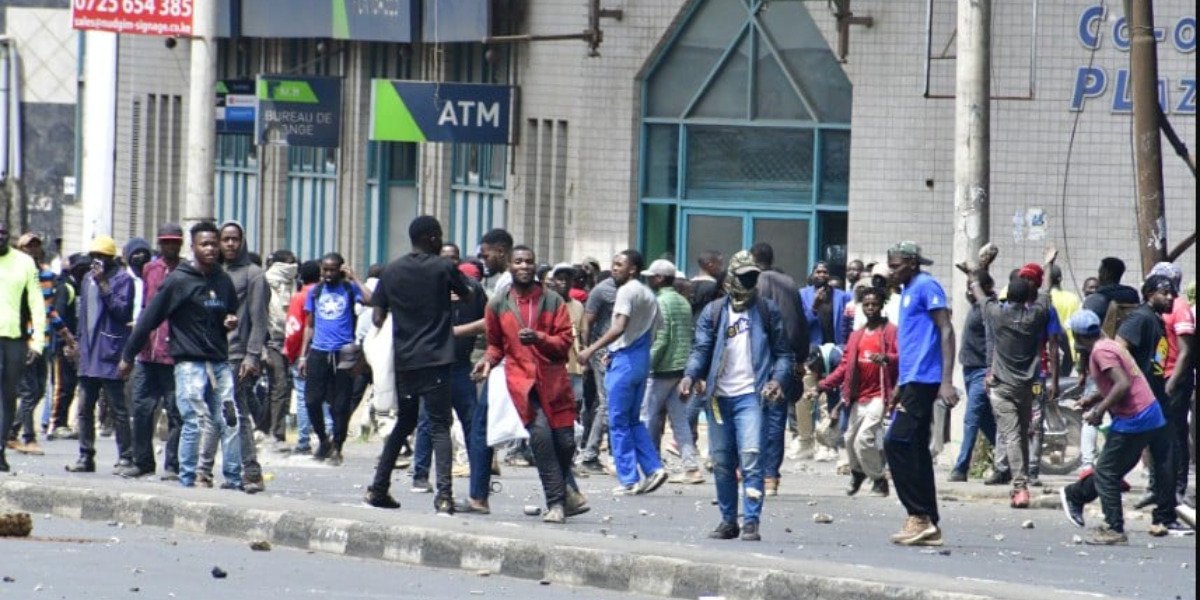
Nairobi's Central Business District (CBD) was brought to a standstill yesterday as demonstrators took to the streets demanding justice for Albert Ojwang, a teacher and blogger whose death has ignited widespread anger.
The protests, unfolding ahead of the first anniversary of the Gen Z protests, paralyzed business operations and disrupted transport across the city. The demonstrations, met with a strong security presence, quickly spread throughout the CBD, leading to the closure of numerous businesses. Shops, banks, and eateries closed their doors, with financial institutions such as Stanbic Bank and Co-operative Bank suspending services to protect staff and customers.
Moi Avenue, Kimathi Street, and the area around Nairobi Archives were particularly affected, as business owners abandoned their premises amid intensifying clashes between protesters and law enforcement. Patrons at Java House on Kimathi Street found themselves temporarily trapped when employees secured the doors following the use of tear gas nearby. Naivas Supermarket on Moi Avenue also closed early due to the escalating unrest. Electronics traders near Jamia Mosque ceased operations, fearing potential attacks. Small-scale traders faced significant financial losses.
"Normally, this area is thriving with business, but today, no one is shopping," says Eugene Kondo, a trader near the Nairobi Archives. "The risks are too high---some people might take advantage of the chaos."
Public transport also suffered severe disruptions, with matatu operators serving key CBD routes such as Tom Mboya Street and Moi Avenue temporarily halting services. Commuters were left stranded, and boda boda riders reportedly increased fares in response to the demand. The protests, initially focused on demanding accountability for Ojwang's death, expanded to include calls for the resignation and prosecution of Deputy Inspector-General Eliud Lagat, accused of negligence in the case. Demonstrators allege that Ojwang was killed while in police custody, fueling demands for justice and greater police accountability.
Police deployed rubber bullets and tear gas to disperse the demonstrators, leading to increasingly violent confrontations. Reports also surfaced of unidentified individuals, believed to be hired agitators, engaging in physical altercations with protesters, further exacerbating the volatile situation. The most serious incident occurred on Mondlane Street near Imenti House, where a street vendor, identified as Ali, was shot in the head. Ali, who was selling masks to passersby, was reportedly assaulted by two uniformed officers before a third officer discharged a firearm at close range.
Video footage circulating online shows Ali collapsing, still clutching the box of masks. Eyewitnesses transported Ali to Bliss Hospital near the Nairobi Archives, but his condition remains uncertain. Melvin Kamau, one of the first responders, recounts, "I saw him lying in a pool of blood before he was taken away. It was devastating." Following the shooting, the officers retreated into a waiting vehicle.
The shooting has prompted strong condemnation from human rights organizations and legal advocates.
Law Society of Kenya (LSK) President Faith Odhiambo called the shooting unjustifiable, saying, "There is no reason for a defenseless civilian to be met with lethal force in a protest. Officers should be trained to de-escalate, not execute."
In response, the National Police Service (NPS) issued a statement acknowledging the shooting and pledging a thorough investigation. The statement also warns against criminal elements within the demonstrations and vows to take action against any groups engaging in unlawful activities.




Comments
No comments yet — be the first.