
'We Were Paid to Attack Protesters,’ Say Goons Recruited in Nairobi Estates
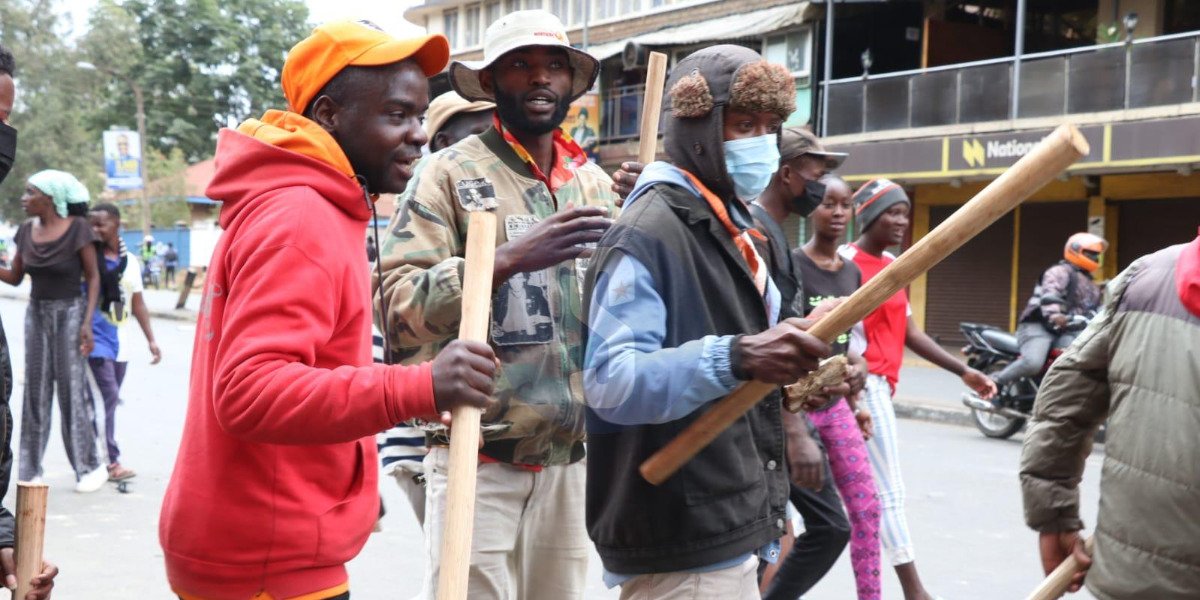
Tensions remain high in Nairobi following Tuesday's protests over the killing of Albert Ojwang, as credible allegations emerge of organised disruption, paid operatives, and complex political manoeuvring.
Eyewitness accounts and internal sources suggest a coordinated campaign sought to undermine the demonstrations, blurring the lines between legitimate state oversight and clandestine political interference. The unrest, which escalated rapidly from a spontaneous outcry, now focuses attention on accusations that prominent political figures enlisted grassroots contacts to recruit individuals to disrupt the protests.
These individuals, primarily youths from Nairobi's informal settlements, were allegedly targeted through estate chairpersons and local influencers, offered modest payments, and vaguely assured of protection, reportedly including informal communications that police would not interfere.
These recruits, colloquially known as "goons," claim they were misled about their role, believing they were hired to protect private property rather than confront fellow citizens. Many state they only discovered their true assignment en route to the city centre, provided with fuel for their motorcycles and minimal cash to justify the risks involved. Confrontations erupted on Moi Avenue when these hired operatives clashed with demonstrators assembled to demand justice for Ojwang.
Motorcyclists were attacked, and property was destroyed, transforming what began as a civic exercise into a scene of violence. Video footage and on-the-ground reports suggest visible cooperation between some disruptors and uniformed police officers. These reports describe individuals openly brandishing pangas and whips while walking alongside law enforcement. This proximity has fuelled public outrage and accusations of tacit state complicity.
State House maintains that maintaining order lies solely with the police service, which operates with constitutional independence. Government Spokesperson Hussein Mohammed asserts that public safety matters are not directed by the executive, stating that the police acted within their legal mandate. Nairobi Governor Johnson Sakaja also distances himself from accusations of sponsoring intimidation, taking a forceful stance against protest-related violence.
Addressing a church event in Kakamega, Sakaja condemned the destruction of property and the "weaponisation'' of public grief." While acknowledging Ojwang's death, Sakaja warns protesters against disorderly conduct, pledging to ensure the capital remains stable and secure. These statements are viewed by critics as implicit threats against constitutionally protected expressions of dissent. Korogocho MCA Absalom Odhiambo, known as Matach, raised concerns after urging the governor to mobilise youth groups to act alongside police in quelling protests.
Social activist Calvince "Gaucho" Okoth denies any role in the disruptive acts. Speaking from abroad, Gaucho, known for affiliations with opposition politics, attributes the rumours to political smear campaigns. The exploitation of economic desperation as a recruitment driver is a recurring theme. Individuals confess they accepted the job offers out of financial necessity. One motorcyclist from Dagoretti North disclosed receiving a late-night call offering KSh2,000 for an early morning assignment, later revealed to involve confrontation in the CBD.
This desperation, when combined with political opportunism, creates an environment where violence is a currency of influence. Following the unrest, government officials have reiterated a hardline stance against criminal behaviour, while defending the right to peaceful assembly. Governor Sakaja condemns the manipulation of civic protests by "militias or politically sponsored groups," characterising such tactics as threats to the nation's democratic fabric.
Government Spokesperson Isaac Mwaura also denounces any affiliation between the state and those inciting violence, urging demonstrators to uphold legal boundaries and refrain from provoking law enforcement. Police spokesperson Michael Muchiri Nyaga confirms that investigations are ongoing, vowing accountability for anyone violating the law.
Comments
No comments yet — be the first.