
Elon Musk Unveils Rocket-Powered Tesla Roadster That Can Drive Upside Down and Fly
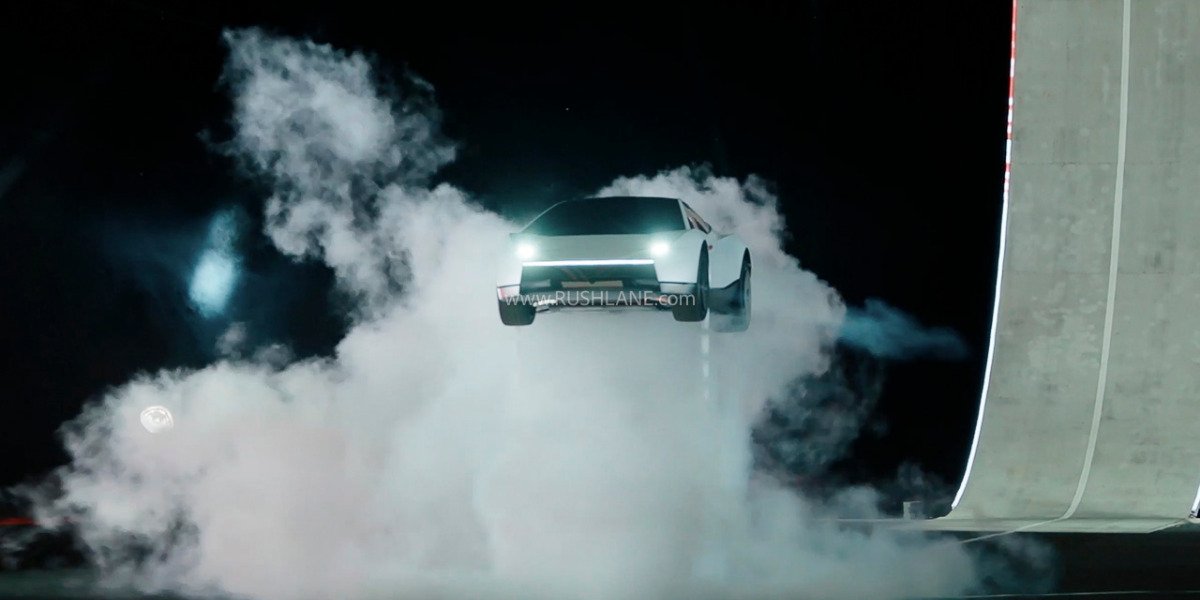
Tesla has unveiled a redesigned Roadster featuring SpaceX-inspired thrusters that the company says will allow the electric sports car to perform aerial manoeuvres, with production targeted for 2028.
The vehicle was presented at an event in Texas, where demonstrations showed it driving upside down along a specially designed ramp, rotating in mid-air and jumping over other vehicles before landing. The launch marks a new stage in Tesla chief executive Elon Musk’s long-running plan to incorporate rocket technology into a road-going car.
The new Roadster will be available in three versions: Performance, Thrust and Rocket. Tesla first announced the second-generation model in 2017, but its release has been delayed several times. The latest unveiling places the vehicle among the company’s most ambitious engineering projects, combining electric performance with technology developed alongside Musk’s aerospace company, SpaceX.
All three versions will feature active aerodynamic systems and a suction mechanism designed to draw air from beneath the car to increase grip. Tesla says these features will improve stability and handling at high speeds, both on public roads and on racing circuits.
The Performance model is designed for road and track use and seats two people. Its adjustable aerodynamic settings allow drivers to prioritise grip or reduce drag, depending on driving conditions. A dedicated track mode is also designed to lower the vehicle and adjust its suspension to improve handling.
The Thrust version is a more powerful variant that retains two seats and adds cold-gas thrusters at the rear. Tesla says the system will help the car accelerate from zero to 100 km/h in less than a second, potentially placing it among the fastest-accelerating production vehicles.
The top-of-the-range Rocket model is designed for one occupant and will reportedly be available by invitation only. Tesla describes it as “air ready”, with 10 cold-gas thrusters positioned around the vehicle to provide forward thrust, lift and rotational control.
The company says the thrusters use compressed air to help the car rise and manoeuvre in the air. The technology formed a central part of the launch demonstrations, which showed the Roadster lifting above other vehicles and adjusting its position before landing. However, the extent to which these capabilities will be available in the final production model remains to be established.
Tesla has opened reservations for the new Roadster, although the payment terms vary by version. The Performance model requires a $50,000 reservation payment, while the Thrust version is listed at $250,000. The Rocket edition is available by invitation. The company has not provided a final delivery schedule beyond its target of beginning production in 2028.
The launch comes as competition in the electric performance-car market intensifies, with manufacturers seeking to improve acceleration, driving range and vehicle technology. Tesla’s approach sets the Roadster apart by combining conventional electric propulsion with systems intended to enable controlled movement in the air.
Despite the dramatic demonstrations, important questions remain about the vehicle’s practical use, safety and regulatory approval. Tesla has yet to establish how the Rocket version’s airborne capabilities would operate within the requirements governing road vehicles.






Comments
No comments yet — be the first.